
Den nye publikation Virksomheder der gør en forskel - Socialøkonomiske virskomheder i Aarhus præsenterer 20…
Babele – A Digital Infrastructure for Collaborative Innovation
Denne artikel er tilgængelig på dansk her
Interview with Manuele Musa, co-founder of Babele
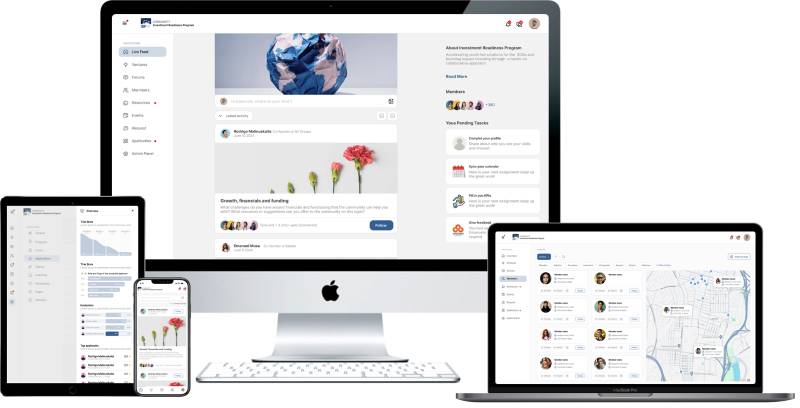
Babele is European tech and consulting social enterprise offering an open-innovation platform where universities, corporations, NGOs, social entrepreneurs and other actors can co-create impactful solutions to address global issues for example climate change and poverty. As a social enterprise Babele has been running programmes to support different social entrepreneurs in the past 11 years. Programmes have been aiming at helping pre seed and seed stage social entrepreneurs with formalising their business model and connecting with different stakeholders in order to improve their go to market strategy and having a better understanding on how to measure impact.
As a tech company Babele has been creating communities for the management of social entrepreneur programmes, networks and ecosystems. The company has been using this kind of technology for all the programmes it has been running and has also been sharing it with other organisation running social innovation programmes from the United Nation to impact HUB to Ashoka, Impact Shakers and to universities. This has all been organisations with the same idea of working with innovators, that had purpose, mission and impact as part of their call and core objectives.
The Origins of Babele: From an Idea to a Shared Vision
The roots of Babele go back to 2007, when Emanuele Musa, later co-founder of Babele, began questioning how democratic participation, innovation, and sustainability could be fundamentally rethought. At the time, he was involved in Sardinian politics, inspired by a local political movement that successfully engaged young people and demonstrated the power of civic mobilisation. This experience sparked a lasting curiosity about how citizens could play a more active role in shaping society beyond voting every few years.
Emanuele became increasingly fascinated by the emerging ideas of crowdsourcing, collective intelligence, and online collaboration. As he later reflected, “I proposed the possibility of using crowdsourcing to move from a model where democracy simply means participating once every election, to one where people actively help define the trajectory of a place or a region.” This was also the moment when early crowdfunding platforms, Wikipedia, and collaborative online tools were beginning to show how the internet could enable large-scale cooperation in ways that had previously been unimaginable.
When these ideas failed to gain momentum in the political sphere, Emanuele carried them into academia. While completing an MBA in Paris, he persuaded his professor to let him write his master’s thesis on applying crowdsourcing to social innovation. As part of his studies, he spent a year in Brazil, including time in Rio de Janeiro, where he deepened his research and completed coursework in Portuguese.
In Brazil, Emanuele worked closely with Ricardo Guimarães, a former United Nations official known for his strong stance on environmental accountability and long-term systemic thinking. Guimarães had successfully challenged the United States over falsified environmental reporting in 2007 and became a powerful mentor. He helped Emanuele understand the structural flaws of economic systems that ignore future generations. This mentorship strongly influenced Emanuele’s thinking about sustainability, pricing mechanisms, and the need for systemic change rather than isolated solutions.
After returning to France and defending his thesis—already titled around a system called “Babele”—Emanuele entered the corporate world, first as a consultant at IBM, and later at Procter & Gamble in Paris and Brussels. There, he worked as an Innovation Manager, focusing on sustainability-driven efficiency projects. These initiatives demonstrated how better coordination, logistics optimisation, and sustainability could reduce costs while improving environmental performance. Although valuable, this work did not fully align with the broader, systemic ambitions that had driven his earlier research.
It was during this period that Emanuele met Ruxandra, who was then working as a consultant at Deloitte. Their first meeting quickly revealed a shared passion for sustainability, systems thinking, and social innovation. Ruxandra’s structured, analytical approach complemented Emanuele’s visionary mindset, and the two soon became partners—both professionally and personally. As Emanuele later recalled, “From the very first night we met, it was clear we shared the same drive and values.”
While continuing their corporate careers, Emanuele and Ruxandra began working on their ideas in the evenings and on weekends, developing concepts, tools, and early workshop formats. Over time, the growing commitment raised a crucial question: whether to continue treating the project as a side initiative or to pursue it fully. Eventually, Ruxandra put it simply: either they committed seriously, or they stopped pretending and used their free time for something else entirely.
The decision was made to leave their corporate jobs. Faced with the high cost of living in Paris, they considered relocating to places where they had family support and lower expenses. They ultimately chose Romania, which offered the right conditions for building a technology-enabled social innovation initiative. Sardinia, Emanuele noted, was better suited for traditional production like agriculture, but less ideal for developing a platform-based, international project.
In Romania, they began running their first workshops and programmes, focusing on how to apply Lean Startup methodologies to social enterprises—an approach that was still new at the time, following shortly after Eric Ries’ book had been published. These workshops quickly gained traction, and Emanuele and Ruxandra found themselves travelling extensively, delivering programmes in over 15 countries, from Berlin to Japan. Alongside this work, they continued developing the Babele platform, gradually building more advanced tools for crowdsourcing, collaboration, and venture support.
Although Emanuele’s original vision had been centred on participatory democracy, the founders made a strategic decision to focus first on social entrepreneurship. Social enterprises, inspired in part by the growing visibility following Muhammad Yunus’ work, were more ready to adopt collaborative and crowdsourced approaches than public institutions at the time. The ambition to apply these ideas to democracy was not abandoned—but postponed, recognised as a longer-term goal.
This journey—from political engagement and academic research to corporate innovation, partnership, and bold entrepreneurship—ultimately shaped Babele as it exists today: a mission-driven social enterprise and platform dedicated to enabling collaboration, innovation, and systemic change for people and the planet.
How the Babele platform works
The Babele platform is designed to support structured collaboration and open innovation processes across diverse stakeholders. At its core, the platform translates the key components of design thinking into a digital, scalable workflow. This includes problem analysis, idea generation, screening and selection of initiatives, strategic planning, validation, and finally implementation and follow-up.
As co-founder Emanuele Musa explains, “The platform allows you to create the entire innovation process end to end, from understanding a challenge to implementing a solution.” Users can involve different stakeholder groups at different stages of the process—such as citizens, employees, experts, NGOs, or customers—depending on where their input creates the most value.
A central principle of the platform is curated collaboration. Crowdsourcing does not mean that everyone contributes to everything. Instead, Babele enables facilitators to design clear phases, each with a defined purpose, scope, and relevant participants. Expert subgroups can be assigned to validate specific elements, such as feasibility, usability, or financial sustainability. As Emanuele puts it, “Crowdsourcing is not about involving everyone in everything—it’s about orchestrating the right stakeholders at the right moment.”
The platform has been used in corporate, public, and social innovation contexts. For example, companies have applied it to co-create new products by engaging employees, engineers, manufacturers, and end users in different stages of the process. Public and financial institutions have used it to collaborate with NGOs and communities to develop and fund social initiatives. Throughout the process, participants can communicate via discussion spaces, share documents, evaluate ideas, and track progress over time.
Babele can act both as a facilitator and consultant, guiding organisations through innovation processes, or purely as a technology provider, supporting consulting firms, public bodies, and networks that already run design thinking or co-creation programmes and want to manage them in a digital environment.
Products and services offered by Babele
Babele offers a flexible range of products and services that can be adapted to the needs and maturity of different organisations. Engagements range from light-touch technology provision to full programme design, facilitation, and operational management.
At the most basic level, organisations use Babele as a digital infrastructure for managing innovation or entrepreneurship programmes. Universities and research institutions, for example, may already have strong internal facilitation capacities and simply require a platform to structure processes, manage applications, and coordinate stakeholders. In these cases, Babele provides the technology along with onboarding and support to help teams map their existing processes into the platform in the most effective way.
Other organisations require a more integrated advisory approach. Foundations and development organisations running social entrepreneurship programmes may combine access to the platform with strategic advice, curriculum development, and content creation tailored to specific target groups. As Emanuele Musa explains, “Some partners need more than just the technology – they want support in shaping the learning journey and development phases of the entrepreneurs they work with.”
At the most comprehensive level, Babele delivers end-to-end programme management. This includes designing and facilitating innovation or social entrepreneurship programmes, coordinating multiple stakeholders, developing curricula, running selection and evaluation processes, and managing day-to-day operations—supported by the Babele platform. In these cases, Babele acts simultaneously as technology provider, strategic partner, and programme operator.
Across all offerings, the common denominator is the combination of technology, impact expertise, and facilitation experience. The platform enables complex co-creation and crowdsourcing processes, while Babele’s background in social innovation and impact-driven work gives the company a distinctive position in the market. As Emanuele notes, “What makes us different is not just the software, but the experience of using it to orchestrate real-world impact processes.”
 Babele team jumping
Economy and business model
Babele operates with a hybrid business model that combines software licensing with consulting and support services, designed to balance financial sustainability with a strong social mission.
At its core, Babele’s platform is offered through a Software-as-a-Service (SaaS) model, where clients pay an annual licence fee to use the technology—similar to other enterprise software subscriptions. Alongside this, Babele generates revenue from consulting and advisory fees related to onboarding, facilitation, programme design, and operational support.
Because Babele primarily serves organisations working with social innovation and social entrepreneurship, affordability and access are central considerations in its pricing strategy. The company applies a context-sensitive pricing model, taking into account whether an organisation is for-profit or non-profit, as well as its geographic and economic context. As Emanuele Musa explains, “We try to adjust pricing based on where organisations are based and what they can realistically afford—an organisation in Malawi cannot be treated the same way as one in California.”
This approach allows Babele to offer very low-cost or near-free access to organisations in low-income contexts, while larger institutions—such as banks or multinational corporations—pay market-based fees. The ambition behind this model is to support broad and inclusive access to innovation infrastructure, even though Emanuele acknowledges that such universal access models are difficult to sustain without public-sector involvement.
As a mission-driven social enterprise, Babele is also highly conscious of mission integrity and customer selection. The company actively chooses partners aligned with its values and avoids engagements that could lead to mission drift. “The real challenge is not finding a business model,” Emanuele notes, “but surviving in a competitive market without compromising the mission.”
Financially, Babele follows a cautious, organic growth strategy. The company has deliberately avoided rapid scaling driven by venture capital and instead focuses on steady development, cost control, and long-term resilience. With a small team of around ten people, Babele prioritises sustainability over aggressive expansion. While the organisation is financially viable, Emanuele describes the broader market conditions as volatile and uncertain, making long-term forecasting challenging.
Why Denmark?
Babele is an international organisation with a geographically diverse team spanning Denmark, Belgium, Brazil, Romania, Portugal, and Bosnia. Although co-founder Emanuele Musa is originally from Italy, Denmark ultimately became the country where he and co-founder Ruxandra chose to settle and build their lives.
The decision was not driven by convenience or short-term business considerations. On the contrary,Emanuele openly acknowledges that running the company from other countries could have been easier or more financially advantageous. Instead, the choice of Denmark was deeply values-driven. “We wanted to move to a country where no one is left behind,” Emanuele explains.
Denmark’s strong welfare model, high levels of social trust, and commitment to social cohesion resonated strongly with Babele’s mission and worldview. For Emanuele and Ruxandra, Denmark represented a society that prioritises inclusion, shared responsibility, and long-term wellbeing over short-term gains.
The decision was also personal. Denmark was seen as the place where they wanted to raise their children and build a family life aligned with the values they work for professionally. “That’s where I want to bring up my kids together with Ruxandra,” Emanuele says.
In this sense, Denmark is not just a base of operations for Babele, but a reflection of the kind of society the organisation strives to contribute to: one built on fairness, opportunity, and care for the collective.
Why Babele Is a Social Enterprise
Babele was founded as a social enterprise because its founders believe that complex societal challenges cannot be solved through traditional, profit-driven business models alone. The decision reflects a broader worldview shared by the founders and deliberately embedded in the company’s structure and way of operating.
According to co-founder Emanuele Musa, impact should not be treated as something that can be addressed in isolation or confined to individual organisations. “We never saw impact as something that can be solved in silos,” he explains. “Real change requires collective impact and coordination across entire ecosystems.”
This belief also shapes how Babele works with organisations across different geographies and financial capacities. Rather than focusing solely on clients’ ability to pay, Babele aims to support initiatives that address pressing social and environmental challenges wherever they are based. The company’s social enterprise model allows it to balance financial sustainability with the flexibility to support impact-driven actors that might otherwise be excluded.
Emanuele is critical of the dominant impact-investment logic that focuses on identifying a single “high-performing” organisation. He argues that no individual company—“not even Google, with all its resources”—can solve issues such as global poverty or climate change alone. Without coordination, even well-funded initiatives risk pulling in different directions. He compares this to “a rowing boat where everyone is rowing as fast as they can, but the boat is not moving.”
Babele’s long-term vision is therefore to increase transparency and coordination across impact initiatives by bringing them together within a shared infrastructure. This makes it easier for stakeholders to understand who is doing what, identify synergies, and collaborate more effectively.
The company’s development has followed a deliberate, phased approach. Initially, Babele focused on smaller programmes, networks, and clusters to ensure that the platform solved real, day-to-day operational challenges. Only once these foundations were in place did the organisation begin reconnecting initiatives into a broader ecosystem. “You need something people actually use every day, before you can build the bigger ecosystem vision,” Emanuele notes.
Today, Babele continues to pursue this long-term ambition through a self-funded model, gradually aligning daily operational needs with its wider mission of enabling collective impact at scale.
Babele’s Impact
Babele understands impact as something that unfolds over time and across systems rather than as a single, easily isolated outcome. Instead of claiming to have solved global challenges, the organisation focuses on the scale, reach, and connective effects of the work it enables.
Over the past eleven years, Babele has supported more than 350 impact and innovation programmes through its platform and advisory work. Through these programmes, over 30,000 social enterprises and impact-driven initiatives have been supported using Babele’s crowdsourcing and collaboration infrastructure.
As co-founder Emanuele Musa explains, the numbers are important, but they are not the whole story. “Did we eradicate poverty? No,” he says. “But that was never the point.” For Babele, impact is about strengthening the capacity of ecosystems to collaborate, innovate, and scale solutions collectively.
What Babele increasingly seeks to understand and document is the transversal collaboration that emerges when different programmes, organisations, and stakeholders are connected through the same infrastructure. “What excites me most is when we start seeing collaboration happening across initiatives,” Emanuele notes, pointing to ecosystem-level change rather than isolated success stories.
By enabling thousands of organisations to work through structured innovation processes, share knowledge, and coordinate efforts, Babele’s impact lies not only in individual projects, but in the growing density and maturity of the broader social innovation ecosystem it helps sustain.
The Best Projects Babele Has Been Involved In
Over the years, Babele has been involved in a wide range of high-impact projects, but some stand out as particularly formative for the organisation and its mission. One of the most memorable initiatives was a global programme developed in collaboration with the United Nations. The project originated when Babele’s co-founder Emanuele Musa reached out directly to economist Jeffrey Sachs, who leads the UN’s Sustainable Development Solutions Network. To Emanuele’s surprise, the response came within minutes and led to a close collaboration with Sachs’ team.
After nearly two years of dialogue, Babele succeeded in shifting the focus from producing reports about social enterprises to creating a concrete investment readiness programme. “Who cares about being featured in a report if it doesn’t help entrepreneurs access markets, capital, or talent?” Emanuele explains. The programme supported social enterprises in professionalising their data rooms, financial structures, and governance, while also addressing a more ambitious goal: putting a value on social and environmental impact alongside traditional financial metrics.
This approach aimed to change conversations with investors so that company valuations would not be based solely on EBITDA (Earnings Before Interest, Taxes, Depreciation, and Amortization) and financial indicators, but also reflect impact. The programme ran successfully for several years and left a lasting impression on Babele, even though it eventually had to be paused due to funding constraints within the UN system. “That project gave us an incredible amount of energy,” Emanuele notes, “and showed that even large institutions can rethink how they support impact-driven companies.”
Alongside such large-scale initiatives, Babele also engages in more reflective, long-term work. One example is Emanuele’s ongoing book project on inequality, which explores how political, technological, geographical, and social factors contribute to widening gaps in society. While not a traditional Babele programme, it reflects the same systemic thinking that underpins the organisation’s work.
Emanuele is far in the process, and hops he will bre able to finish it this year.
Together, these projects illustrate how Babele operates at the intersection of practice, policy, and ideas—always with the aim of enabling more effective and equitable impact.
Babele’s Future
Babele’s future is closely tied to the intelligent use of technology—particularly artificial intelligence—to strengthen coordination and collaboration in complex impact ecosystems. According to co-founder Emanuele Musa, many social innovation programmes, networks, and clusters struggle not because of a lack of ideas, but because they lack the time, resources, and capacity to ensure that all stakeholders contribute effectively throughout long and complex processes.
Babele sees artificial intelligence as a way to support and guide participants through innovation journeys, regardless of their technical skills or prior experience. “We already use AI to optimise clicks on advertisements,” Emanuele notes, “but the same logic can be used to curate information and support people so they can contribute in the best possible way.” Rather than replacing human facilitation, AI is envisioned as a tool that automates follow-ups, manages information flows, and reduces friction in large-scale collaborative processes.
By combining collective human intelligence with artificial intelligence, Babele aims to make advanced collaboration processes accessible at scale—without requiring large teams of coordinators behind the scenes. This could significantly lower the cost of running complex participatory and innovation processes and open the door to new forms of large-scale collaboration, including initiatives that resemble participatory democracy.
While experienced consultants and facilitators will still be essential for defining goals and designing processes, Babele’s long-term vision is to automate the “hand-holding” aspects of participation. “If we can make coordination less expensive and more inclusive,” Emanuele explains, “we could unlock forms of collective intelligence that were simply not imaginable before.” The key question for the coming years is which organisations will be ready to take the first step and fully embrace these new possibilities.
Thanks to Emanuele Musa for the interview
More on Babele https://babele.co
Follow Babele on:
LinkedIn
Facebook
FACTS ABOUT BABELE
Year of founding: 2013
Number of employees: 10
Company form: ApS in Denmark, SRL in Romania
Photo: Babele

Related Posts


